


Somewhere between late-night Google searches, algorithm updates, client calls, and ranking reports, we all collect a few pieces of content that quietly shape how we think.
Not the flashy threads.
Not the “I made $50k in 30 days” case studies.
Not the recycled growth hacks.
I’m talking about the rare articles that don’t just teach tactics — they influence how you approach an entire career.
This is about one of those.
The Blog I Stumbled Across — and Never Really Forgot
Between 2020 and 2022, while searching for something SEO-related (I don’t even remember what anymore), I landed on a blog by James Dudley from Fatrank titled:
“Why Become an SEO?”
At the time, I wasn’t looking for motivation.
I was just trying to get better at my job.
But a few paragraphs made me pause.
They weren’t selling dreams.
They weren’t promising shortcuts.
They described SEO in a way that felt… grounded.
Real.
As my own journey continued as Google evolved, SERPs shifted, strategies matured, and the industry became more complex I kept thinking about that post.
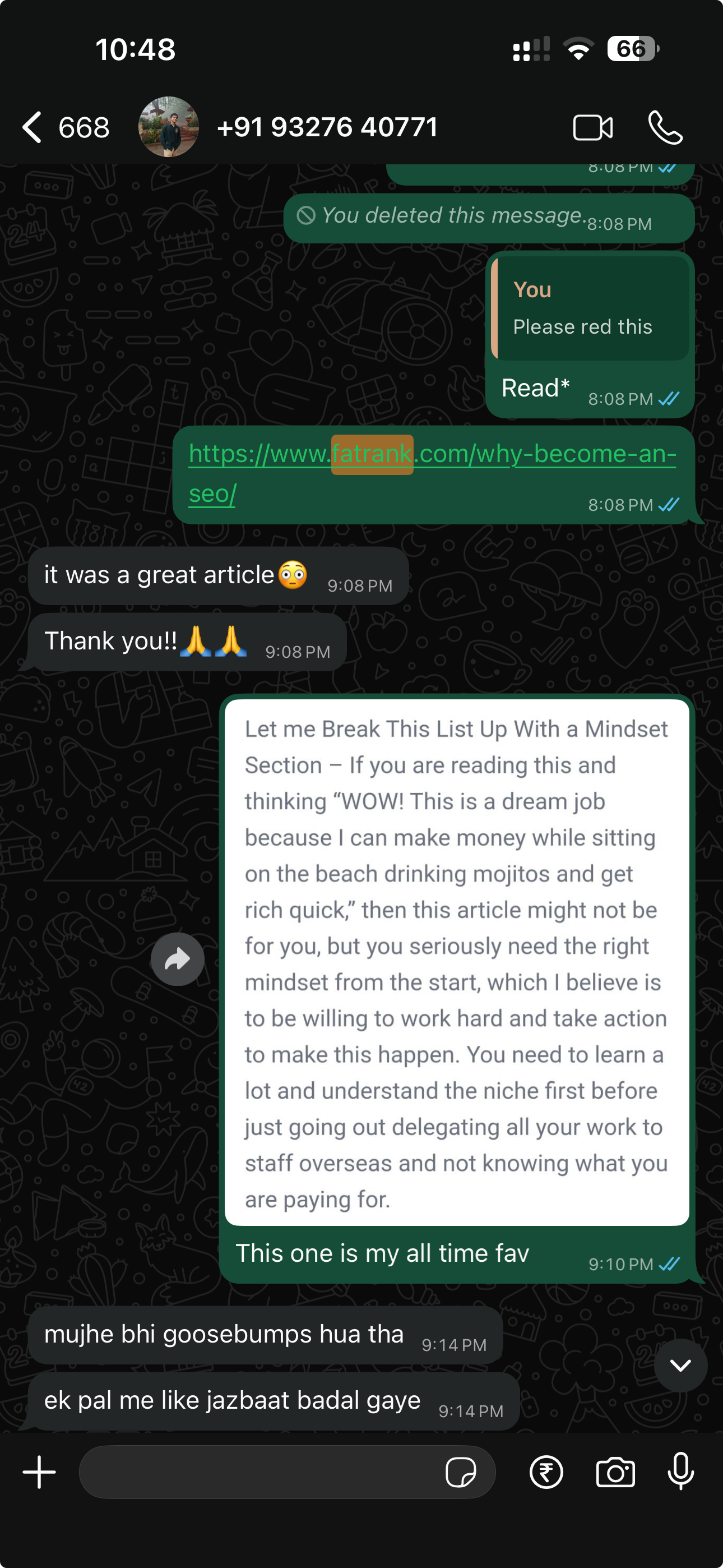
I shared it with many junior SEOs.
With colleagues debating their next move.
With people wondering whether SEO was still worth pursuing.
Whenever someone asked:
“Should I get into SEO?”
That article was usually part of my answer.
Tonight, I Went Looking for It
Earlier today, I caught myself thinking about my career.
How I started.
How uncertain those early years felt.
How much the work and the industry has changed.
That blog popped into my head again.
So I tried to find it.
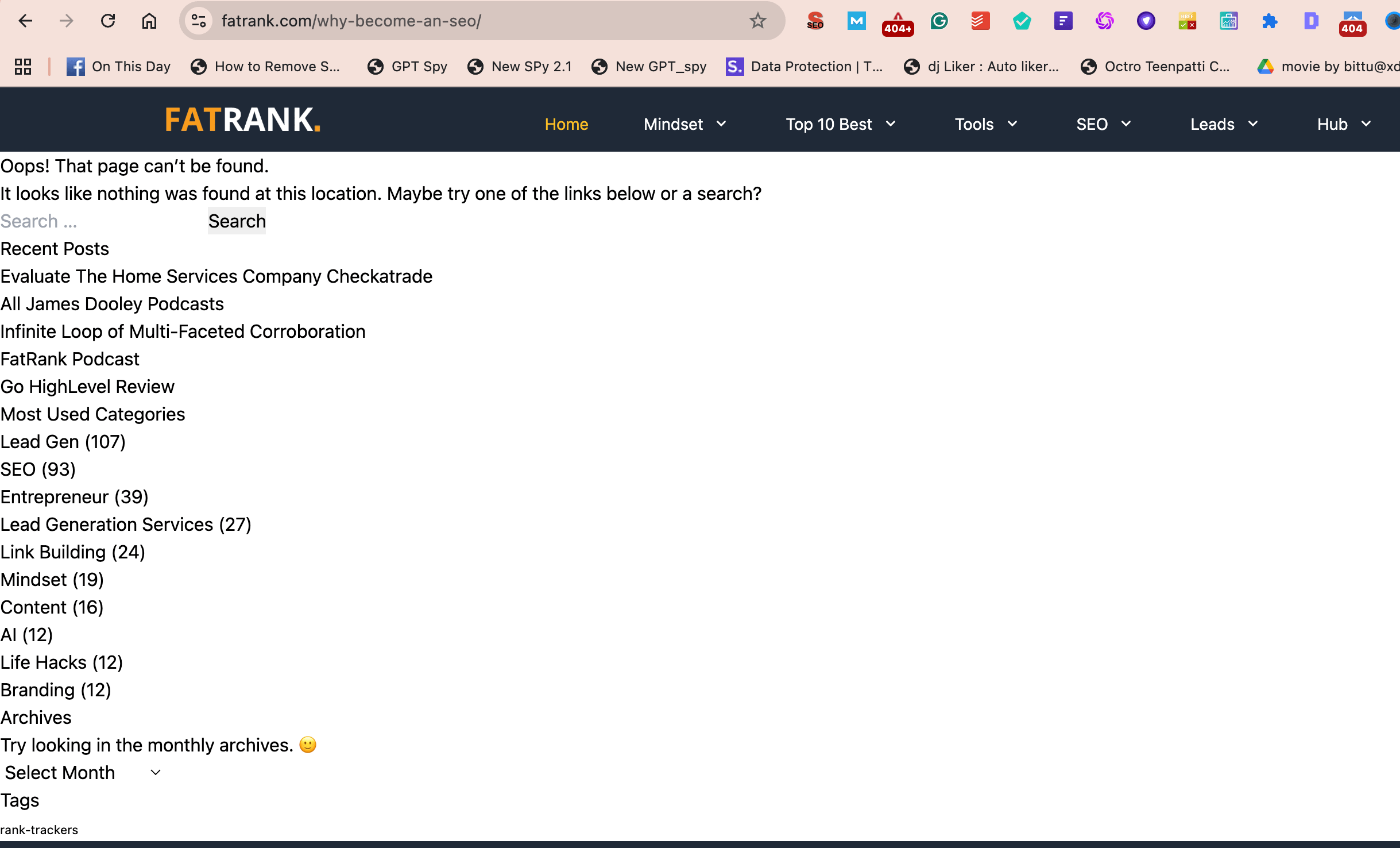
Nothing.
The original page on Fatrank was gone.
I searched my WhatsApp chats.
Old Slack conversations.
Bookmarks.
Random documents.
Finally, I found it preserved on Web Archive:
👉 https://web.archive.org/web/20240721100606/https://www.fatrank.com/why-become-an-seo/
Opening that link felt strangely emotional like rereading notes you scribbled at the beginning of your career without realizing how important they’d become.
Why It Still Resonates With SEOs Today
When I reread the article years later, I was surprised by how current it still felt.
Despite all the algorithm updates, new tools, shifting SERP features, and changing client expectations, the fundamentals James wrote about hadn’t aged at all.
Three ideas, in particular, stood out.
1. Job Satisfaction
James highlighted something we rarely talk about openly in SEO: the deep satisfaction that comes from doing the work well.
Not chasing vanity metrics.
Not celebrating short-term spikes.
But genuinely helping businesses grow.
Seeing companies thrive because of your strategy.
Building relationships that last longer than contracts.
Earning the kind of trust where clients recommend you without being asked.
Anyone who has been in SEO long enough knows how rare that feeling is and how motivating it becomes when you find it.
It’s the difference between “running campaigns” and building something meaningful.
2. Not Being Location-Dependent
All you really need is a laptop and a stable internet connection.
From home offices.
From cafés.
From different cities, sometimes different countries.
Long before “remote-first” became a buzzword, SEO already carried that freedom inside it.
For many of us, that flexibility didn’t just change how we worked.
It changed how we designed our lives.
3. Flexible Working Hours
James also talked about something that only becomes more valuable with time: control over your schedule.
Shaping work around life not forcing life to squeeze between meetings and deadlines.
Learning when curiosity strikes.
Experimenting when traffic dips.
Building skills at your own pace.
Creating a career that can grow with your family, your health, and your priorities instead of competing with them.
But the section that stayed with me the most both then and now was the mindset.
Because beneath all the lifestyle benefits, James made one thing very clear:
SEO only rewards people who respect the craft.
4. You Never Run Out of Potential Clients
One part of the article that feels even more relevant today was James’ point about demand.
He wrote about the sheer scale of the internet — how tens of thousands of new websites go live every single day.
Hundreds of thousands of new businesses entering the digital world.
All of them competing for attention.
All of them needing customers.
All of them, eventually, looking for ways to grow revenue.
And that’s where SEO becomes valuable.
If you truly understand how search works — if you know how to attract qualified traffic, convert it into leads, and tie strategy back to business outcomes — you don’t just become a marketer.
You become someone companies depend on.
In an industry where tools change and platforms evolve, that kind of value creates durability.
Because as long as new websites keep launching…
businesses will keep needing people who know how to make them visible
The Part That Stayed With Me for Years
James didn’t sugarcoat anything.
In the middle of listing all the freedoms SEO can offer, he stopped and inserted a reality check the kind that makes you lean back in your chair.
Paraphrased, he said:
If you’re reading this thinking, “Wow. This is perfect. I can make money while sitting on a beach, drinking mojitos, and get rich quick,” then this probably isn’t for you.
Because SEO doesn’t reward fantasy.
It rewards people who are willing to work.
Who take action instead of chasing shortcuts.
Who study the craft before trying to scale it.
Who understand what they’re outsourcing instead of blindly delegating.
Who respect the process enough to learn it properly first.
That paragraph alone could save someone years of frustration.
In an industry where screenshots of traffic graphs travel faster than the explanations behind them , where hype cycles reset every few months that kind of honesty feels rare.
SEO isn’t glamorous.
It’s technical audits that take longer than expected.
Content rewrites no one sees but everyone benefits from.
Log files at midnight.
Tests that fail.
Updates that erase months of progress.
And then…
You open your laptop the next day and start again.
That’s the job.
And for the right kind of person?
That’s exactly what makes it worth doing.
Why I’m Writing This Now
This isn’t nostalgia for nostalgia’s sake.
It’s a reminder of how our industry actually moves forward through people who take the time to write honestly, to share what they’ve learned, without any idea who might stumble across their words years later.
James almost certainly didn’t know that one article would:
• influence someone’s career path
• get forwarded in Slack channels and WhatsApp groups
• be recommended to juniors finding their footing
• resurface during moments of reflection
• still matter long after the original page disappeared
But that’s what meaningful writing does.
It doesn’t chase attention.
It compounds.
It shows up quietly in other people’s journeys.
And sometimes…
It waits for you in the Wayback Machine.
A Small Tribute
So this is simply a thank-you.
To James Dudley for writing something years ago that helped shape how I thought about SEO long before I realized its impact.
To every SEO who discovered this industry through a single blog post, a generous mentor, or a late-night search query that answered more than just a tactical question.
And to the internet for preserving the good things when they disappear.
If you work in SEO and haven’t read this piece yet, I genuinely recommend opening the archived version here:
👉 https://web.archive.org/web/20240721100606/https://www.fatrank.com/why-become-an-seo/
Because sometimes the articles that matter most aren’t the loudest ones.
They’re the ones that quietly stay with you.
And I’d love to hear from you:
Which article, blog, or person influenced how you approached SEO early in your career?
Let’s surface those pieces.
So the next generation of SEOs can find them too.